


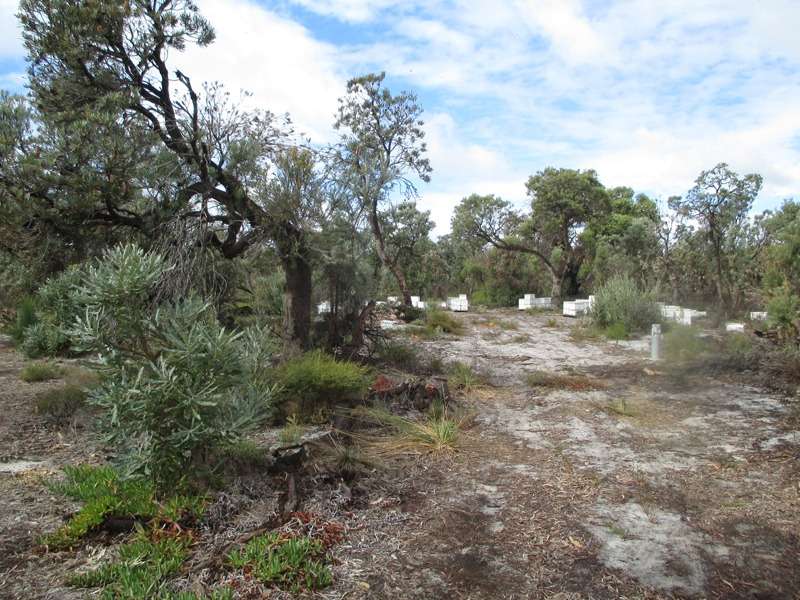
THE effects of prescribed burning on beekeepers and the honey industry will come under the spotlight at a conference this week.
The Yanchep-based CRC for Honey Bee Products will be presenting a paper on the Impact of fire on beekeepers at the Prescribed Burning conference at UWA on July 31 to August 1.
In June the Beekeeping Industry Council of WA (BICWA) published a talk by 2016 WA scientist of the year Kingsley Dixon on Prescribed burning and the future of our honey industry.

This followed a presentation by respected beekeeper John Davies at the BICWA conference in May called Wildfires – prescribed burning – drying climate impacts on beekeeping.
Dr Dixon said
the adoption of a prescribed burning system targeting about 12,000sqkm on a
six-year or less rotation was putting the biodiversity, the eco-system and the
ecologies especially of Western Australia’s south west at risk.
He said it was not just some plants that beekeepers relied on but also mammals,
reptiles and birds, which would be affected when fire frequencies exceeded post
fire recovery periods.
Some banksia shrubland need 10 to 14 years to recover after fire, native heaths and sedges 15 years, jarrah forest 81 years and eucalyptus salubris woodland 200 years while the honey possum requires the land to remain unburnt for 25 years.
He said a detailed mapping of Kings Park carried out in 1939 had been repeated in 1999.
The results showed that while the number of trees had increased the number of banksias had decreased with rapid regrowth trees such as she oak, tuarts and wattles dominating.
“Important for beekeepers whole swags of fire sensitive understorey – those species that don’t re-sprout but come back from seed buried in the soil seed-bank had vanished from bushland,’’ he said.
“Of course the wattles and some of the legumes had increased in great numbers (but) things such as native heath and boronias – things that we rely on as beekeepers had gone form Kings Park and they’re gone for good.’’
He said the broadacre system of imposed European-style firing, which was not based on Indigenous burning patterns, would result in species having to adapt to a six-year or less rotational burn or go extinct.
He said while the prescribed burning system did not stop wildfire it provided a level of protection around strategic assets and that was where the future of prescribed burning should be not on the broadacre scale seen today.


