


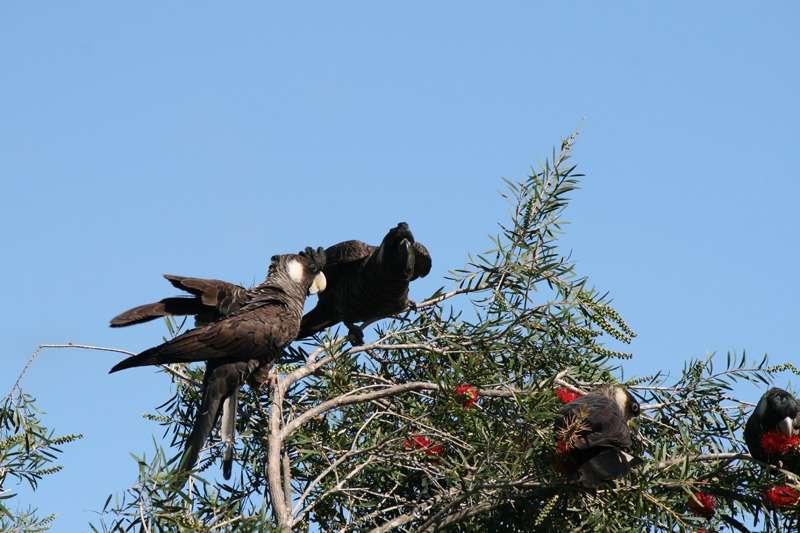
THE McGowan Government’s decision to plant native seedlings at former pine plantation in Pinjar to create foraging and roosting habitat for the endangered Carnaby’s cockatoo is a welcome first step, according to Birdlife Australia.
Southwest black-cockatoo project officer Adam Peck said any revegetation in the former pine plantation was welcome when it was considered the total loss of pines would eventually tally 23,000ha.
But he said 100s of hectares a year would need to be revegetated for a decade to make up for the 35 per cent decline in the number of Carnaby’s black cockatoos in the Perth-Peel area in the past decade due to the loss of pines in that area.

This week Water Minister Dave Kelly and Environment Minister Stephen Dawson said the former pine plantation would be revegetated as habitat for endangered Carnaby’s cockatoo.
The joint project between the Water Corporation and the Department of Biodiversity, Conservation and Attractions (DBCA) will also promote groundwater recharge, helping secure water for the future – it also meets the Water Corporation’s no-net-clearing commitment.
Mr Dawson said more than 5600 native seedlings were being planted across the 28ha site in Pinjar.
In addition to promoting and protecting recharge to the Gnangara groundwater system, which provides about 40 per cent of Perth’s drinking water to the metropolitan area, the native vegetation will also provide valuable habitat for native wildlife, including Carnaby’s.
Mr Peck said there were about 5000ha of pines left and they would be gone in three years.
This meant the government should have started revegetation much earlier and on a much bigger scale.
It also need to be taken into account it would be eight years before any revegetation was producing food for the birds to eat.
He said there would be a lapse of about five years where due to the lack of food some birds would starve and others would not breed because they would not have the energy.
Every year the net loss of Carnaby’s habitat increased due to clearing for roads and houses, agriculture and mining.
At present the birds are still foraging in the remaining pines but more offsets are required as food plants are needed in the coastal areas and also in the Wheatbelt where the birds go to breed.
He said Birdlife Australia thought the federal government needed to refer the clearing of the pines for review under the Environment Protection and Biodiversity Conservation (EPBC) Act 1999.
He said the state government had legal advice that it was not necessary but the organisation disagreed.
Mr Dawson said the government was committed to the recovery and protection of Carnaby’s cockatoo, with extensive work being done to conserve the endangered species.
“This project complements a further 20,000 seedlings that were also planted by DBCA this year as part of an ongoing program that has seen 15,000 to 20,000 seedlings planted in Gnangara each year, over the past five years,’’ he said.


